

It can be hard to determine what is driving Donald Trump a month into the US and Israel's programme of strikes on Iran.
But it is apparent he has his attention fixed on the oil markets.
A word – or tweet – from the American leader concerning his intentions once would spark significant moves in oil prices, as investors seized upon signals the hostilities could intensify or come to an end.
However, in the past few days, traders seem to be becoming increasingly doubtful about the value of his pronouncements.
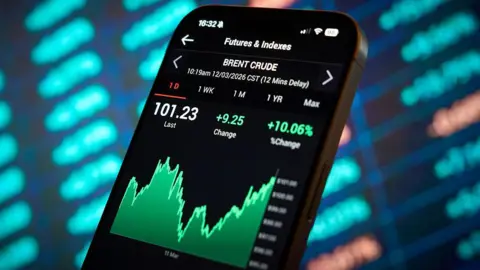
The price of oil was valued at approximately $72 a barrel before 28 February, when the military action against Iran commenced.
The week prior, it reached a high of $118 a barrel on 19 March and by Friday afternoon was valued at just below $112 – significantly up from its pre-war price.
Below are several examples from the recent weeks where Trump and the markets appear to have influenced one another – with mixed effects.
Navigate with the arrow to move to the next slide.
"Energy prices have become a proxy for wider geopolitical and economic uncertainties, jumping when Trump's rhetoric becomes hawkish and declining when his language de-escalates," observes one investment manager.
He adds that markets are understandably attuned to those messages, due to the significant macroeconomic threats that come with increasing oil prices.
"Traders are trying to assess genuine uncertainty," he comments. "The markets can appear jumpy or bewildered, but what they're actually doing is navigating geopolitical risk in live, with oil sitting right at the heart of that."
But, it can be tough for investors to determine how to trade, given that a portion of Trump's remarks seem intended to moving oil prices, as opposed to articulating official strategy, says another financial strategist.
"As they say, the first casualty of war is clarity," he remarks. "It is likely some of the rhetoric trading of statements around successful negotiations, and the contrary, very much are focused on simply shifting the market price of oil."
Market Reactions Become Increasingly Tempered
On a recent Thursday, minutes after US equity markets experienced their sharpest fall since the beginning of the conflict with Iran, Trump announced talks with Iran were going "very well" and he was postponing planned attacks on Iran's oil facilities until at least 6 April.
However, the price of crude continued to increase.
One market analyst says that investor responses are "becoming more muted" because of the "wide divergence" between Trump's optimistic statements and the lack of acknowledgement from Tehran.
"In light of the appearances, a large number of investors can not see an quick conclusion to the conflict and markets remain nervous."
Another market expert says markets have also adapted to Trump "repeatedly shifting position at signs of geopolitical, equity market or economic trouble".
"There is a degree of scepticism, or even downright distrust, creeping in at the edges," he concludes.


